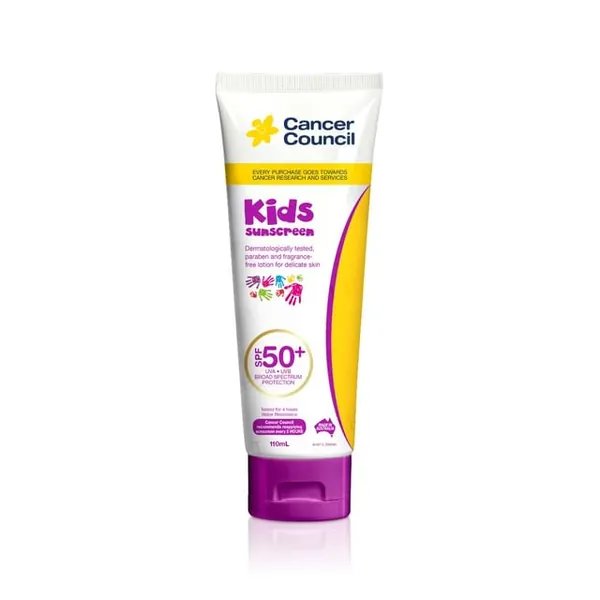
Cancer Council
Kids Sunscreen SPF 50+
SPF 50+ Invisible No white cast — chemical/hybrid filters that straight-up disappear on skin. Sensitive & baby Fragrance-free, low-irritant, baby-safe gentle formulas. Australia global Formulation variant: global. Region-specific reformulations are tracked as separate products.
4-MBC at 4% in a kids product is a major red flag (EU-banned filter); benzyl alcohol adds sensitization risk.
◐ CHEM Chemical filters Chemical filters — Organic filters absorb UV. Cosmetically elegant, but filter choice matters. ((· BS Broad spectrum Broad spectrum — Blocks UVA + UVB — covers the whole sun-damage spectrum. F F-FREE Fragrance-free Fragrance-free — No added fragrance — lower irritation risk if your skin's reactive. A A-FREE Alcohol-free Alcohol-free — No drying short-chain alcohols (denatured / SD alcohol).
Where to buy it
YesStyle US In stock 広告 / Affiliate Disclosure · Sunscreen Ranker earns commission on the above links. Rankings are scored independently — no brand pays for placement.
61.2
Composite
Composite score · independent
Ranks #1306 of 1558 in the current catalogue. 4-MBC at 4% in a kids product is a major red flag (EU-banned filter); benzyl alcohol adds sensitization risk.
01 The score breakdown
02 Composition · key UV filters 3 filters resolved
03 The facts, at a glance
Protection
Filter type Mineral filters (zinc oxide, titanium dioxide) sit on skin and reflect UV. Chemical filters absorb UV. Hybrid runs both.
Chemical
Broad spectrum Covers both UVA and UVB. UVA drives aging and deeper damage; UVB gives you burns.
Yes
Formulation & feel
Texture How it feels going on — milk, gel, cream, spray, stick, essence, lotion, powder, or cushion.
Cream
Finish How it looks once dry: matte, natural, dewy, or glowy.
Natural
Tinted Adds sheer pigment (iron oxides) that masks the white cast common to mineral filters and gives a skin-tone finish.
No
Fragrance-free No synthetic perfume added. Not FDA-defined in the US; the EU requires 'Parfum' + the 26 named allergens on the label. 'Unscented' is different — it can hide masking fragrance. Botanical oils still scent.
Yes
Alcohol-free No drying short-chain alcohols (alcohol denat., SD alcohol, ethanol). Doesn't mean fatty alcohols like cetyl or stearyl — those are emollients.
Yes
Verdict Is it worth it?
Kids chemical SPF 50+ using avobenzone, octocrylene, and ethylhexyl triazone. The formula also contains 4-methylbenzylidene camphor, a filter banned in the EU, which raises concern in a children's product. Benzyl alcohol adds further sensitization risk.
Pros
- Fragrance-free and alcohol-free formulation
- Avobenzone provides UVA coverage
- Ethylhexyl triazone adds stable UVB protection
- Broad-spectrum SPF 50+ for everyday sun exposure
Cons
- Contains 4-methylbenzylidene camphor, banned in the EU
- Benzyl alcohol can sensitize reactive skin
- No mineral filters to round out the blend
- Octocrylene-led organic set is dated chemistry
Who it's for: Parents seeking an Australian SPF 50+ in markets where 4-MBC is allowed; not for those avoiding EU-banned filters or sensitive to benzyl alcohol.
04 Full ingredient list (INCI) 7 ingredients
MODERN FILTER 1 LEGACY FILTER 2 MINERAL FILTER 0 ADDED FRAGRANCE 0 NATURAL FRAGRANCE 1 ALCOHOL 0 WATCH 0
4-Methylbenzylidene Camphor· Octocrylene Octocrylene — degrades to benzophenone over time. · Butyl Methoxydibenzoylmethane Avobenzone — UVA filter, needs stabilisation. · Ethylhexyl Triazone Uvinul T 150 — high-efficiency UVB filter. · Benzyl Alcohol Known fragrance allergen (one of the EU-26). Naturally found in essential oils; required to be listed by name in the EU. Can trigger sensitivity even when no synthetic parfum is added. ·Phenoxyethanol·Hydroxyacetophenone
Source: brand-published INCI. Last verified 2026. Show in detail
05 Benzyl Alcohol NATURAL FRAGRANCE Known fragrance allergen (one of the EU-26). Naturally found in essential oils; required to be listed by name in the EU. Can trigger sensitivity even when no synthetic parfum is added.