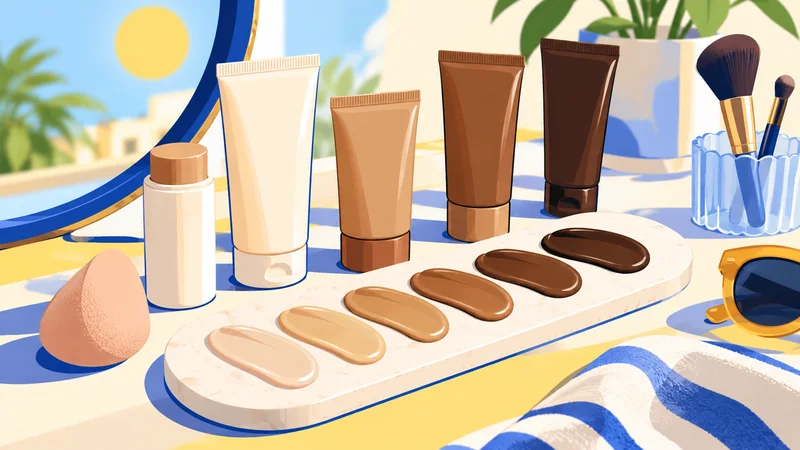
The Best Tinted Sunscreens for Everyday Wear
Color and protection in one fall-friendly step.

Tinted sunscreens are formulated as sunscreen first, so applied at a normal dose they deliver their labeled broad-spectrum protection — unlike foundation with SPF, which to reach its rating would need roughly 5-10 times a typical makeup application.
Dermatologists note the appeal of a good tinted sunscreen is twofold: the iron oxides that create the tint add coverage clear formulas lack, and a flattering finish makes people more likely to actually wear SPF every day.
Questions we get a lot
Is a tinted sunscreen better than foundation with SPF?
Generally yes. A tinted sunscreen is formulated as sunscreen first, so when applied properly it delivers reliable broad-spectrum protection plus a light tint. Foundation with SPF is rarely applied thickly enough to reach its labeled protection — you'd need roughly 5–10 times a normal makeup amount.
Can a tinted sunscreen replace my foundation?
For light, everyday coverage, often yes — a tinted sunscreen can stand in for a base while delivering reliable broad-spectrum protection when applied generously. Foundation with SPF, by contrast, is rarely applied thickly enough to reach its labeled protection, so it shouldn't be your sunscreen.
How do I reapply a tinted sunscreen during the day?
Reapply a tinted sunscreen about every two hours of sun exposure. Over bare skin, simply layer more on; over makeup, use a tinted stick, cushion, or powder SPF pressed (not rubbed) on top. The morning layer should be a full, generous application.
r/SkincareAddiction: 'Is a tinted sunscreen worth it over a regular one for everyday wear?'