House of Rose
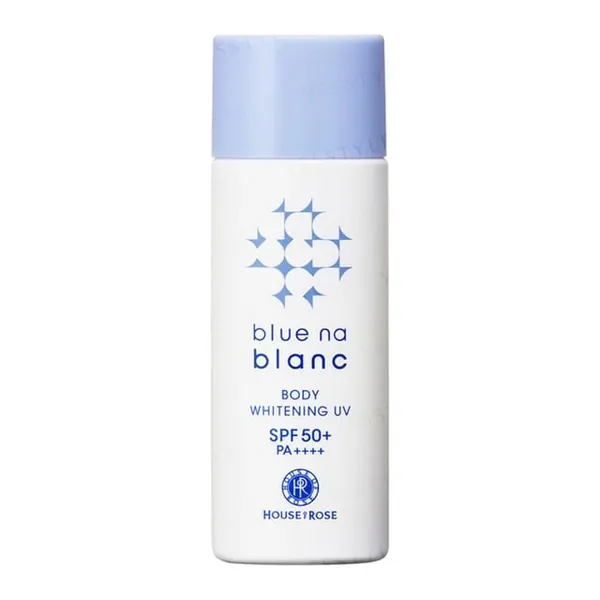
Blue Na Blanc Body Whitening UV SPF 50+ PA++++
SPF 50+ · PA++++ Tone-up Brightening veil from mineral & tone-up formulas; evens out your skin tone. Japan jp-domestic Formulation variant: jp-domestic. Region-specific reformulations are tracked as separate products.
Mineral filters help health-safety, but fragrance + orange oil + geraniol + chamomile + phenethyl alcohol stack high allergen risk; mineral body finish modest.
△ MIN Mineral filters Mineral filters — Physical filters (ZnO, TiO2) sit on top and reflect UV. Reef-safer and super gentle. ((· BS Broad spectrum Broad spectrum — Blocks UVA + UVB — covers the whole sun-damage spectrum. A A-FREE Alcohol-free Alcohol-free — No drying short-chain alcohols (denatured / SD alcohol).
Where to buy it
YesStyle US In stock 広告 / Affiliate Disclosure · Sunscreen Ranker earns commission on the above links. Rankings are scored independently — no brand pays for placement.
74.3
Composite
Composite score · independent
Ranks #618 of 1558 in the current catalogue. Mineral filters help health-safety, but fragrance + orange oil + geraniol + chamomile + phenethyl alcohol stack high allergen risk; mineral body finish modest.
01 The score breakdown
02 Composition · key UV filters 2 filters resolved
03 The facts, at a glance
Protection
Filter type Mineral filters (zinc oxide, titanium dioxide) sit on skin and reflect UV. Chemical filters absorb UV. Hybrid runs both.
Mineral
Broad spectrum Covers both UVA and UVB. UVA drives aging and deeper damage; UVB gives you burns.
Yes
Formulation & feel
Texture How it feels going on — milk, gel, cream, spray, stick, essence, lotion, powder, or cushion.
Cream
Finish How it looks once dry: matte, natural, dewy, or glowy.
Natural
Tinted Adds sheer pigment (iron oxides) that masks the white cast common to mineral filters and gives a skin-tone finish.
No
Fragrance-free No synthetic perfume added. Not FDA-defined in the US; the EU requires 'Parfum' + the 26 named allergens on the label. 'Unscented' is different — it can hide masking fragrance. Botanical oils still scent.
No
Alcohol-free No drying short-chain alcohols (alcohol denat., SD alcohol, ethanol). Doesn't mean fatty alcohols like cetyl or stearyl — those are emollients.
Yes
Verdict Is it worth it?
A mineral body sunscreen with ascorbyl glucoside, ectoine, and rutin layered over zinc oxide and titanium dioxide. Multiple fragrance allergens plus citrus peel and chamomile oils make it a poor fit for reactive skin.
Pros
- Mineral-only filters: zinc oxide and titanium dioxide
- Ascorbyl glucoside as a stable vitamin C derivative
- Ectoine and rutin support the antioxidant load
- Glyceryl glucoside humectant for hydration
- Body-scale tone-up format with a wider application surface
Cons
- Added fragrance plus geraniol and phenethyl alcohol
- Citrus aurantium dulcis peel oil can cause phototoxicity
- Anthemis nobilis flower oil adds allergen risk
- Cosmetic finish trails fragrance-free peers
Who it's for: Body-use buyers wanting a mineral tone-up SPF with vitamin C derivatives who accept perfumed Japanese formulas.
04 Full ingredient list (INCI) 46 ingredients
MODERN FILTER 0 LEGACY FILTER 0 MINERAL FILTER 2 ADDED FRAGRANCE 1 NATURAL FRAGRANCE 2 ALCOHOL 0 WATCH 0 ACTIVE 1
Ascorbyl Glucoside·Dipotassium Glycyrrhizate·Cyclopentasiloxane·Water· Zinc Oxide Mineral UV filter — physical block; reef-safer. ·Ethylhexyl Palmitate· Titanium Dioxide Mineral UV filter — physical block; reef-safer. ·Butylene Glycol·Polymethylsilsesquioxane·Glyceryl Glucoside·Sodium Chloride·Dimethicone·Polyhydroxystearic Acid·PEG/PPG Dimethicone Copolymer (pending review)·Centaurea Cyanus Flower Extract·Ectoine·Rutin·Polyquaternium-51·Phytosteryl/Octyldodecyl Lauroyl Glutamate·Arginine·Serine· Citrus Aurantium Dulcis Peel Oil Essential / botanical oil — releases scent compounds (terpenes, aldehydes) naturally. Marketed as "natural" but still a recognised source of contact sensitivity. · Geraniol Known fragrance allergen (one of the EU-26). Naturally found in essential oils; required to be listed by name in the EU. Can trigger sensitivity even when no synthetic parfum is added. ·Anthemis Nobilis Flower Oil·Phenethyl Alcohol·Methicone·Hydrated Silica·Aluminum Hydroxide·Acrylates Copolymer·Diisostearyl Malate·Polyglyceryl-6 Polyricinoleate·Aluminum Dimyristate·Sorbitan Sesquiisostearate·Dimethicone Crosspolymer·Sodium Hydroxide·di(cholesteryl (pending review)·behenyl (pending review)·Octyldodecyl Lauroyl Glutamate·Sorbitan Sesquioleate·Citric Acid· Tocopherol Vitamin E — antioxidant. ·Mica·Kaolin·Ultramarines·Phenoxyethanol· Fragrance Synthetic fragrance blend — a common irritant. Composition is a trade secret; can include dozens of compounds. Avoid if your skin is reactive.
Source: brand-published INCI. Last verified 2026. Show in detail
14 PEG/PPG Dimethicone Copolymer Pending review
22 Citrus Aurantium Dulcis Peel Oil NATURAL FRAGRANCE Essential / botanical oil — releases scent compounds (terpenes, aldehydes) naturally. Marketed as "natural" but still a recognised source of contact sensitivity.
23 Geraniol NATURAL FRAGRANCE Known fragrance allergen (one of the EU-26). Naturally found in essential oils; required to be listed by name in the EU. Can trigger sensitivity even when no synthetic parfum is added.
36 di(cholesteryl Pending review
37 behenyl Pending review
46 Fragrance ADDED FRAGRANCE Synthetic fragrance blend — a common irritant. Composition is a trade secret; can include dozens of compounds. Avoid if your skin is reactive.