Encapsulation: The Tech Making Sunscreens Feel Lighter
How formulators trap filters for better texture.
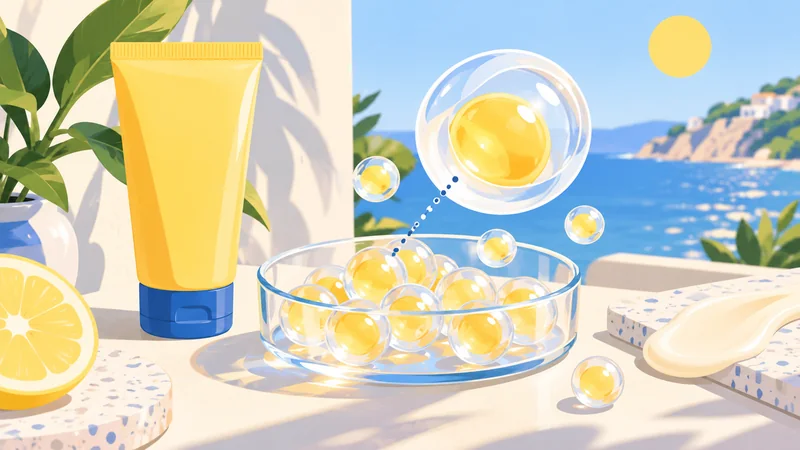
Avobenzone can lose a large share of its UV protection within the first hour of sun exposure unless it is stabilized — one reason formulators turn to encapsulation and stabilizers.
Encapsulating filters can shield them from one another and from the skin, improving both texture and photostability while reducing potential irritation.
Questions we get a lot
What does it mean when a sunscreen's filters are encapsulated?
Encapsulation traps UV filters inside tiny carriers (such as lipid spheres or silica shells) instead of dissolving them freely in the formula. This can make the product feel lighter and less greasy, keep incompatible filters apart, and slow their breakdown — improving both texture and stability without changing how much filter you apply.
Why are some UV filters more photostable?
A photostable filter keeps absorbing UV without breaking down in sunlight. Older filters like avobenzone can lose protection within an hour unless paired with stabilizers such as octocrylene. Next-generation filters are engineered to stay chemically stable, so protection lasts longer — though reapplication is still advised.
Does a lighter-feeling sunscreen protect less?
Not inherently. Texture comes from the carrier system — oils, emulsifiers, film formers and encapsulated filters — not from the amount of UV protection. A well-formulated lightweight sunscreen can hit the same SPF as a heavy cream, as long as you still apply a generous, even layer.
r/SkincareScience: 'What does it mean when a sunscreen says its filters are encapsulated?'