How Sunscreens Achieve Water Resistance
The chemistry that helps SPF survive a swim.
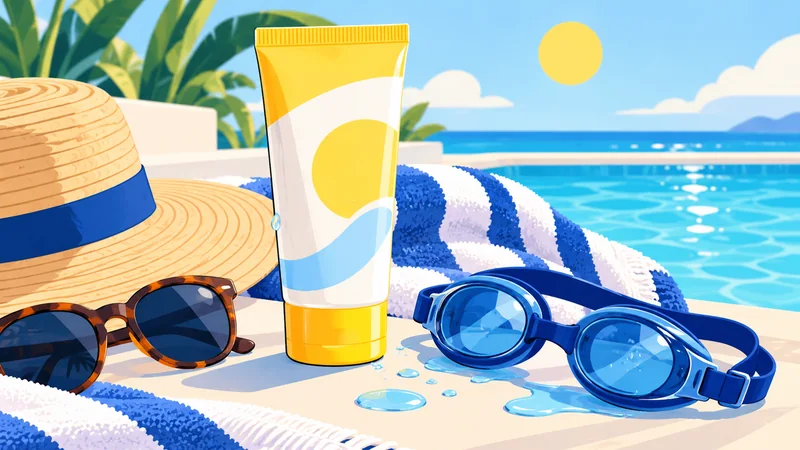
US sunscreens can be labeled water-resistant for only 40 or 80 minutes, the two durations the FDA allows; the term 'waterproof' is not permitted.
Chemists explain that water resistance comes from film-forming polymers that keep the protective layer adhered to skin through water and sweat — not from any extra UV-blocking power.
Questions we get a lot
How do sunscreens become water-resistant?
Water resistance comes from film-forming polymers that help the sunscreen layer cling through water and sweat. US labels may claim '40 minutes' or '80 minutes' of water resistance — never 'waterproof.' Reapply after swimming, heavy sweating or towel drying to keep protection intact.
What do '40 minutes' and '80 minutes' on a sunscreen label mean?
Those are the only two water-resistance durations US labels can claim, indicating how long the sunscreen maintains its SPF during water or sweat testing. After that window — or after towel drying — you should reapply. No US sunscreen can be called 'waterproof' or 'sweatproof.'
How often should I reapply water-resistant sunscreen at the beach or pool?
Reapply at least every two hours, and right after swimming, heavy sweating, or towel drying — even with a water-resistant formula. Water resistance buys time in the water; it doesn't make protection permanent. Apply generously each time to actually reach the labeled SPF.
r/SkincareAddiction: 'What's the difference between a water-resistant sunscreen and a regular one?'