The Future of Sunscreen Formulation
Where filter and texture science is heading.
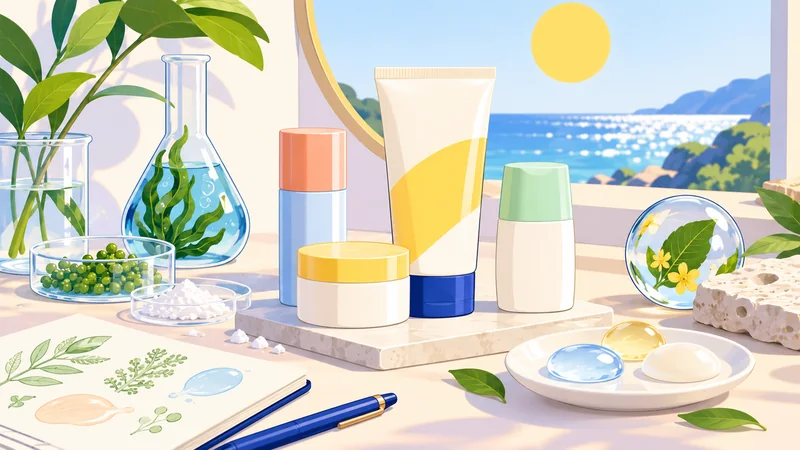
Film-forming polymers help maintain a more uniform sunscreen layer through sweat and water.
Modern 'SPF boosters' and film formers help spread filters into a more even, protective layer.
Questions we get a lot
Does sunscreen expire?
Yes. Filters degrade over time, so expired product gives unreliable protection. The FDA requires sunscreens to remain stable for at least three years; check the expiration date and discard any that's past date or has changed color, smell or texture — heat exposure speeds breakdown.
Why does mineral sunscreen leave a white cast?
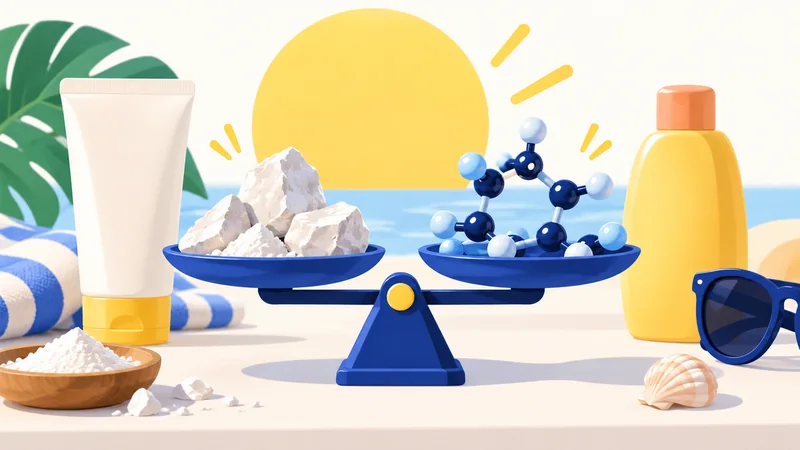
White cast comes from mineral filters — zinc oxide and titanium dioxide — scattering visible light, not just UV. Larger particles and higher concentrations scatter more, leaving a whitish film, especially on deeper skin tones. Tinted formulas with iron oxides, or well-dispersed/nano particles, reduce it.
Do antioxidants in sunscreen actually work?
Antioxidants such as vitamins C and E don't filter UV, but they can neutralize some of the free radicals UV generates, adding a complementary layer of defense. They support — never replace — sunscreen. A studied vitamin C+E combination showed measurable added photoprotection.
r/AsianBeauty: 'Should I layer vitamin C under my sunscreen?'