How Film Formers Keep Your Sunscreen Working
The polymers that hold protection in place.
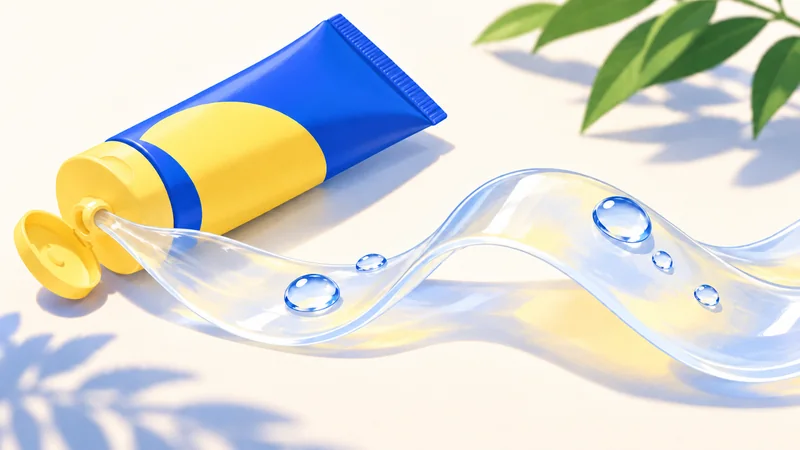
Real-world studies repeatedly find people apply only about a quarter to half of the 2 mg/cm² test dose, so an even, well-spread film matters as much as the filters themselves.
Formulators describe film formers as the 'scaffolding' of a sunscreen: they help the active filters dry down into a continuous sheet that resists water and sweat rather than beading into uneven patches.
Questions we get a lot
What is a film former in sunscreen?
A film former is a polymer that helps the UV filters dry down into a thin, continuous, even sheet on the skin instead of separating into patchy spots. A more uniform film gives more reliable protection and helps the product cling through sweat and water.
How do film formers make a sunscreen water resistant?
Film formers create a flexible, water-tolerant layer that keeps the filters in place when you sweat or swim, which is what lets a product earn a 40- or 80-minute water-resistance claim. Even so, the film breaks down over time, so reapplying after swimming, toweling off, or every two hours of sun exposure is still essential.
Do film formers replace the need to reapply sunscreen?
No. Film formers help the layer last and resist water, but the film still thins out from rubbing, sweat, and abrasion, and the filters themselves can degrade in light. Reapply generously every two hours of sun exposure and after swimming or heavy sweating.
r/SkincareScience: 'What is a film former in sunscreen and why does it matter?'