Why Some Sunscreens Sting and Others Don't
Formulation factors behind the discomfort.
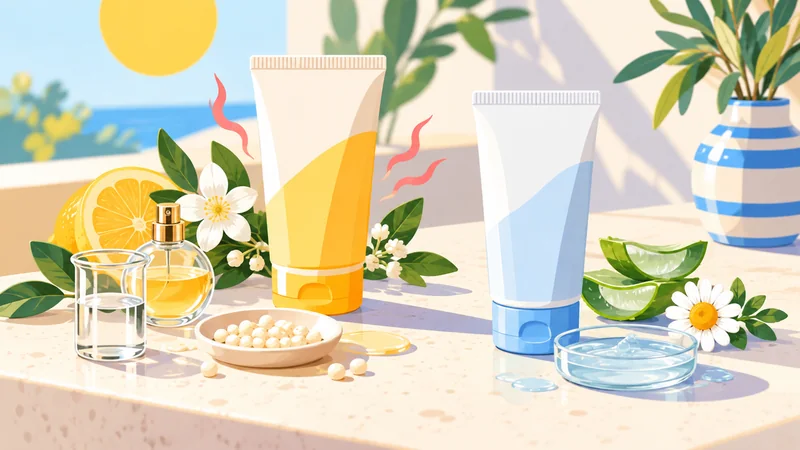
Fragrance is one of the most common causes of cosmetic contact allergy, which is why fragrance-free sunscreens are a frequent recommendation for skin that stings or reacts.
Dermatologists point to fragrance, denatured alcohol and certain chemical UV filters as the usual culprits behind a sunscreen that stings or burns sensitive skin.
Questions we get a lot
Why does my sunscreen sting or burn?
Stinging usually comes from the formula rather than the UV filters as a category: fragrance, denatured alcohol, essential oils and a few chemical filters are common irritants, and stinging is worse on a compromised or freshly exfoliated barrier. Switching to a fragrance-free, alcohol-light mineral formula often solves it.
Why does sunscreen sting my eyes specifically?
Eye stinging is often caused by sunscreen migrating into the eyes with sweat, and chemical (organic) filters tend to sting more than mineral ones. A fragrance-free mineral stick or a water-resistant formula applied carefully around the eye area, kept a few millimeters back from the lash line, usually helps.
Which sunscreens are gentlest for skin that stings easily?
For skin that reacts, fragrance-free mineral (zinc oxide / titanium dioxide) sunscreens are generally the gentlest, since they don't rely on the chemical filters most associated with stinging. Patch-test a new product on the inner arm for a few days before using it on the face.
r/SkincareAddiction: 'Why does one sunscreen sting and burn while another feels totally fine?'