Topic
Filter Chemistry & Next-Gen Filters articles.
Every Filter Chemistry & Next-Gen Filters article on the blog — sourced, science-led, zero hype.
-
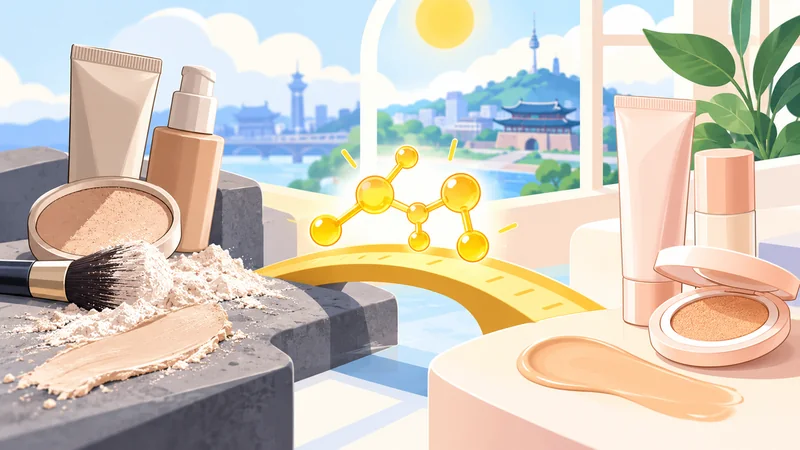
Filter chemistry Why US SPF Makeup Feels Chalky - and How Bemotrizinol Could Fix It The reason your US SPF makeup feels heavier than the Korean version comes down to the filter list - and that list may finally be growing. Read article →
-
Filter chemistry Closing the UVA Gap: What Bemotrizinol Means for US Sun Protection American sunscreen has trailed the world on modern UVA filters for decades - bemotrizinol is the biggest step yet toward closing that gap. Read article →
-
Filter chemistry Bemotrizinol: The First New US Sunscreen Filter Proposed Since 1999 For 26 years the US filter list stood still while Europe and Asia raced ahead - this December 2025 proposal is the first real move to catch up. Read article →
-
Filter chemistry FDA Proposes Bemotrizinol: The First New US Sunscreen Filter Since the '90s A next-gen filter the rest of the world already uses just took its biggest step toward US shelves - and it reshapes the reef-safe debate too. Read article →
-
Filter chemistry The SAFE Sunscreen Act Just Became Law: Here's the Real Timeline for Better US Sunscreen A quiet November 2025 law could reshape the US sunscreen aisle, but the better filters won't appear overnight. Read article →
-
Filter chemistry The 2025 SAFE Sunscreen Act Targets the Korean and Japanese Filters You Can't Buy in the US A law signed in November 2025 finally pushes the FDA to look at the advanced UV filters that Korea and Japan have used safely for years. Read article →
-
Filter chemistry One Base, 21 Sunscreens: The Wild Child Formula That Failed SPF Dozens of 'different' sunscreen brands are built from the same wholesale base — and when Australia's TGA tested one shared formula, 21 products failed at once. Read article →
-
Filter chemistry A September 2025 Meta-Analysis Reopens the Sunscreen-and-Melanoma Debate Headlines claiming sunscreen 'doesn't prevent melanoma' need context — here's why observational studies are messy and why dermatologists still strongly recommend SPF. Read article →
-
Filter chemistry Sunscreen Reform Made the MAHA Report: How 2025 Politics Pushed the FDA How did a long-stalled US sunscreen filter suddenly get momentum in 2025? The answer runs through Washington politics as much as chemistry. Read article →
-
Filter chemistry Why Europe Reopened the Titanium Dioxide File in September 2025 Titanium dioxide is the backbone of mineral sunscreen — here's why the EU is taking another hard look at it in 2025 and what it could (and couldn't) mean for your SPF. Read article →
-
Filter chemistry TPO Banned From September 2025: The UV Gel-Nail Chemical the EU Swept Out Not every 'UV' product is sunscreen — the EU's September 2025 TPO ban targeted the UV-cured gel manicures sitting right next to your SPF. Read article →
-
Filter chemistry 2025 Journal Makes the Case: Newer UV Filters Could Improve US Health A peer-reviewed 2025 paper spells out exactly which next-generation filters Americans are missing and the photoprotection gap it leaves on their skin. Read article →
-
Filter chemistry 2025 Review Links Oxybenzone to Hormone and Reproductive Effects A 2025 review pulls a decade of human-exposure data on oxybenzone into one place, separating the real hormone signals from the hype. Read article →
-
Filter chemistry Korea's Watchdog Flags 4-MBC in Popular Sunscreens (July 2025) Korean sunscreens dominate global wishlists, but a July 2025 domestic audit shows even legal filters can hide EU-flagged concerns - here's how to read the label. Read article →
-
Filter chemistry Two Benzophenones, Two 2025 Verdicts: EU Clears BP-5 but Not BP-2 The EU's June 2025 ruling split two near-identically named filters into opposite verdicts — and shows why "benzophenones are bad" is the wrong takeaway. Read article →
-
Filter chemistry EU Reaffirms Octinoxate Safe at 10% in 2025 SCCS Opinion Octinoxate is banned in Hawaii but the EU just reaffirmed it at 10% in 2025, a sharp case study in why 'endocrine-active' doesn't automatically mean 'unsafe at use levels.' Read article →
-
Filter chemistry SAFE Sunscreen Standards Act Becomes Law in November 2025 A bipartisan 2025 law finally chips away at why US sunscreen lags the world, opening a path for the elegant tinted and hybrid SPF formulas Americans import to be made at home. Read article →
-
Filter chemistry 16 of 20 Sunscreens Failed SPF Claims, One Returned SPF 4 The number on the bottle isn't a guarantee, so here's what an independent lab actually found and how to choose a sunscreen that delivers what it promises. Read article →
-
Filter chemistry When Industry and Watchdogs Agree: CHPA and EWG Both Backed 2025 Sunscreen Reform It's rare for an industry trade group and a consumer-safety nonprofit to agree - but in 2025 both wanted the same thing for your sunscreen. Read article →
-
Filter chemistry Could US Kids' Sunscreen Finally Catch Up to Korea and the EU? Wondering why American sunscreen feels stuck in the past? A 2025 bill is the political mechanism that could change what's on the shelf for your family. Read article →
-
Filter chemistry Four Lawmakers, One Bill: The 2025 Push to Modernize FDA Filter Approval US sunscreens don't lag Korea's and France's because of bad chemistry - it's a regulatory bottleneck that Congress moved to fix in June 2025. Read article →
-
Filter chemistry Congress Just Moved to Unstick US Sunscreen: The SAFE Standards Act The reason US shelves lack the elegant filters Europe and Asia enjoy is regulatory - and in 2025 Congress finally passed a fix. Read article →
-
Filter chemistry EU Declares Benzophenone-1 Unsafe in Cosmetics (April 2025) Benzophenone-1 isn't a UV filter you slather on — it's a hidden cosmetic stabilizer, and in April 2025 EU scientists ruled it unsafe. Read article →
-
Filter chemistry FDA's 2025 Benzene Sweep: 6 Recalls, and Why It Should Reassure You The same benzene panic that hit sunscreens in 2021 reached acne products in 2025, but the FDA's own numbers are more reassuring than the headlines suggest. Read article →